How Credit Card Interest Works and Ways to Avoid Paying Extra
Credit cards offer a convenient way to make purchases, manage everyday expenses, and build a credit history. However, they can also become expensive when balances are not paid on time or in full.
One of the biggest challenges for credit card users is understanding how interest works. Many people focus on their monthly payments without realizing how quickly interest charges can increase the total amount they owe.
Even a relatively small balance can become costly when high interest rates and repeated monthly charges are involved.
The good news is that credit card interest is not always unavoidable. With proper planning, responsible spending, and an understanding of your card's terms, you may be able to reduce or completely avoid interest charges on eligible purchases.
This guide explains how credit card interest works, how financial institutions calculate charges, and which strategies can help you save money.
What Is Credit Card Interest?
Credit card interest is the amount a financial institution charges when you borrow money through your credit card and do not repay it under the applicable interest-free terms.
When you use a credit card to purchase something, the issuer initially pays the merchant on your behalf. You then become responsible for repaying the amount charged to your account.
If you pay your statement balance in full by the due date and your account qualifies for a purchase grace period, you can generally avoid interest on those purchases.
However, if you carry an unpaid balance, interest may begin accumulating according to your card agreement.
The amount you pay depends on several factors, including your annual percentage rate, outstanding balance, payment timing, and transaction type.
Understanding these factors is the first step toward managing credit card costs.
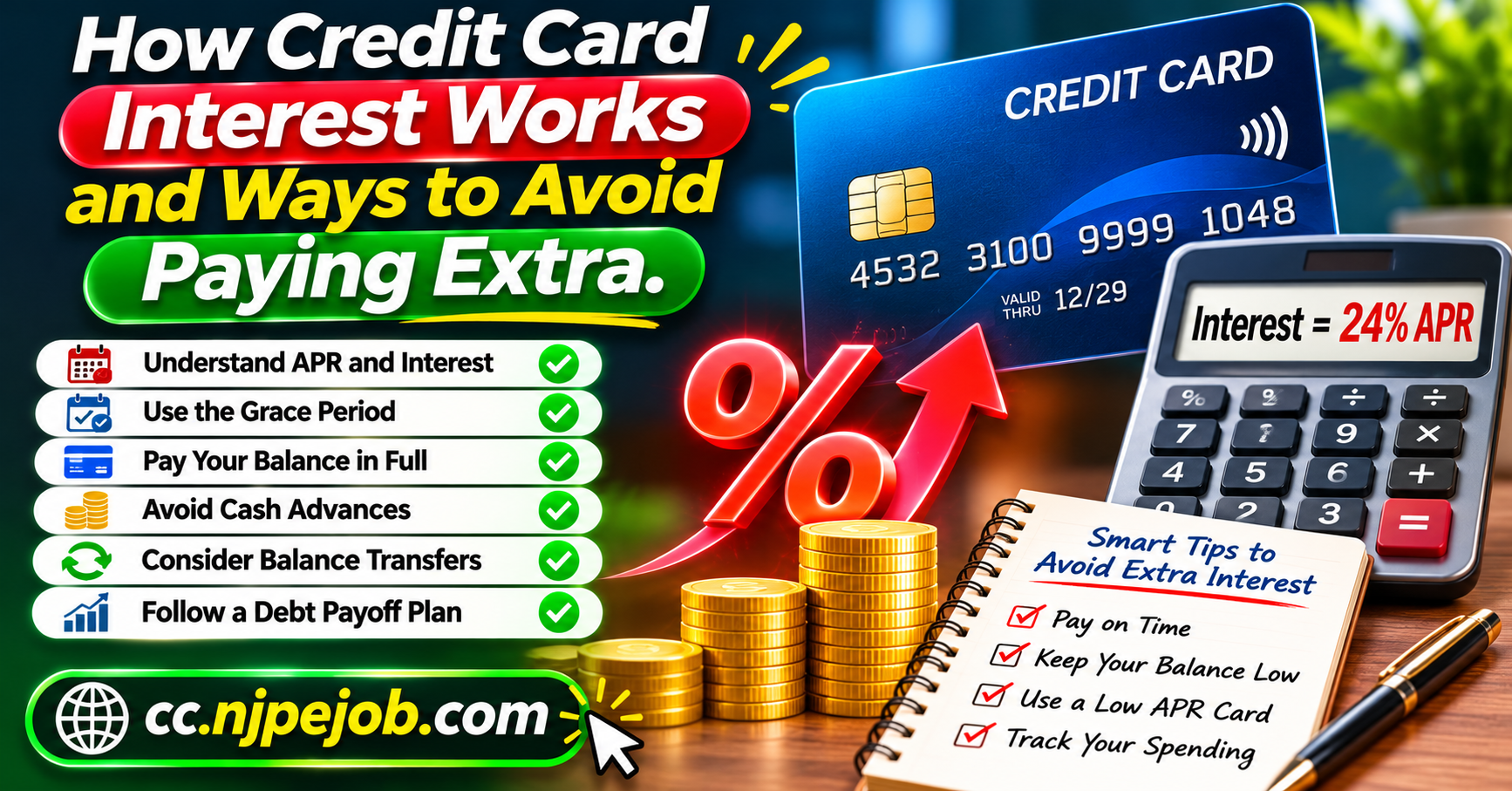
Understanding Credit Card APR
APR stands for Annual Percentage Rate. It represents the yearly interest rate associated with borrowing money through a credit card.
For example, suppose a credit card has a purchase APR of 24%.
This does not mean you automatically pay 24% interest every month. Instead, the APR expresses the interest rate on an annual basis.
Many credit card issuers convert the annual rate into a daily rate to calculate interest charges.
Credit cards may also have different APRs for different transactions.
Common categories include:
Purchase APR: Applies to eligible purchases when interest is charged.
Balance Transfer APR: Applies to balances transferred from another credit account.
Cash Advance APR: Applies to certain cash withdrawals and cash-equivalent transactions.
Penalty APR: May apply when specific conditions in the card agreement are met.
Introductory APR: A temporary promotional rate offered for a defined period.
Reviewing these rates before using your card can help prevent unexpected borrowing costs.
How Is Credit Card Interest Calculated?
Many American credit card companies calculate interest using a daily periodic rate and an average daily balance method.
The daily periodic rate is commonly calculated by dividing the APR by 365, although some issuers use a different day-count method.
Consider this simplified example.
Suppose your credit card has:
Outstanding balance: $2,000
Purchase APR: 24%
Billing period: 30 days
No applicable interest-free grace period
The approximate daily interest rate would be:
24% ÷ 365 = 0.06575% per day
If your balance remains at $2,000 throughout the billing period, the estimated interest would be:
$2,000 × 0.24 ÷ 365 × 30 = $39.45
Therefore, you could owe approximately $39 to $40 in interest for that billing period.
This is a simplified calculation. Actual interest charges may differ because of daily balance changes, compounding, transaction dates, and the issuer's calculation method.
The important lesson is that credit card interest can accumulate every day you carry an interest-bearing balance.
What Is a Credit Card Grace Period?
A grace period is the time between the end of a billing cycle and the payment due date.
Most credit cards provide a grace period for purchases, although issuers are not required to offer one.
If your account qualifies for the grace period and you pay your statement balance in full by the due date, you can generally avoid interest on eligible purchases.
For example, imagine your billing cycle ends with a statement balance of $1,200.
If you pay the full $1,200 before the payment deadline and meet the card's grace-period requirements, you may avoid purchase interest.
However, if you pay only $500, the unpaid portion may become subject to interest.
You may also lose the grace period on new purchases until the conditions for restoring it are met.
This makes the grace period one of the most valuable features for responsible credit card users.
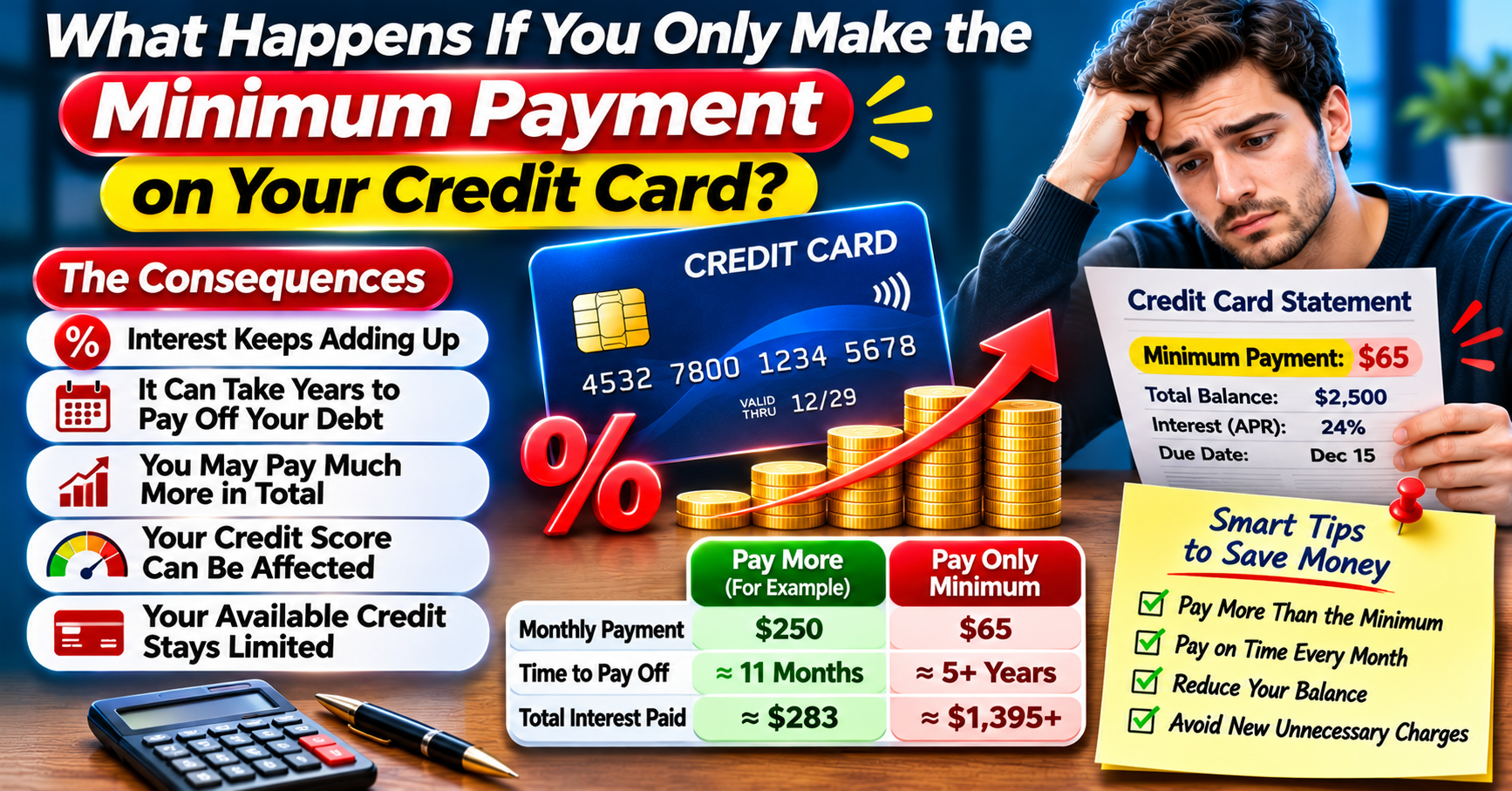
Why Paying Only the Minimum Can Become Expensive
Credit card statements usually display a minimum payment amount.
This is the smallest required payment you must make to keep the account current under its payment terms.
Although paying the minimum can prevent certain late-payment consequences, it generally does not stop interest from accumulating.
For example, suppose you have a $3,000 balance with a 24% APR.
If you repeatedly make only minimum payments while continuing to use the card, a significant portion of your payments may go toward interest rather than reducing the amount borrowed.
As a result, repayment could take substantially longer and become more expensive.
Paying more than the minimum whenever possible helps reduce principal balances and future interest costs.
1. Pay Your Statement Balance in Full
One of the most effective ways to avoid credit card purchase interest is to pay your entire statement balance by the due date.
Your statement balance represents the amount shown when your latest billing cycle closed.
It is different from your current balance, which may include purchases made after the statement was generated.
If your card offers a purchase grace period and you remain eligible for it, paying the full statement balance on time is generally sufficient to avoid interest on covered purchases.
You do not necessarily need to pay every new transaction immediately.
However, you should ensure you have enough money available to cover the statement when payment becomes due.
Building this habit can prevent interest from becoming a recurring expense.
2. Make Payments Before the Due Date
Payment timing matters when managing credit card debt.
If you are already carrying an interest-bearing balance, making an additional payment earlier can reduce the amount of interest that accumulates.
For example, paying an extra $300 in the middle of a billing cycle may reduce the balance used in subsequent daily interest calculations.
This can be particularly useful for people trying to pay off existing credit card debt.
Consider scheduling payments shortly after receiving your paycheck.
You can also make smaller payments throughout the month instead of waiting until the final payment date.
Always make sure the required payment is received by your issuer's deadline.
3. Avoid Cash Advances Whenever Possible
Cash advances are among the more expensive credit card transactions.
When you withdraw cash using a credit card, the transaction may be subject to a separate APR and additional fees.
Unlike ordinary purchases, cash advances generally do not benefit from a purchase grace period.
Interest commonly begins accumulating immediately.
For example, withdrawing $500 through a credit card cash advance could result in both a transaction fee and ongoing interest.
The exact charges depend on your card agreement.
Before considering a cash advance, examine less expensive alternatives and compare the total cost of borrowing.
Avoid treating your credit card as a regular source of cash withdrawals.
4. Consider a Lower-Interest Credit Card
If you regularly carry a balance, your card's APR can significantly affect your borrowing costs.
A card with a lower APR may save money compared with a similar card charging a substantially higher rate.
For example, a borrower carrying $4,000 at a 28% APR generally faces higher interest costs than someone carrying the same balance at 17%, assuming comparable repayment behavior.
However, interest rates are not the only factor to consider.
Review annual fees, balance transfer charges, promotional conditions, and other account terms.
Consumers with stronger credit histories may qualify for more competitive interest rates, but approval and available rates depend on the issuer's evaluation.
5. Understand Balance Transfer Offers
Some credit cards offer a promotional 0% APR for qualifying balance transfers.
A balance transfer allows you to move debt from one credit account to another, potentially reducing interest charges during a promotional period.
For example, transferring a high-interest balance to a card offering 0% introductory APR for 15 months could provide time to reduce the principal without promotional interest accruing on that transferred balance.
However, several important conditions apply.
Balance transfers may include an upfront transfer fee.
The regular APR generally applies to any remaining promotional balance after the introductory period ends.
Additionally, carrying a transferred balance may affect the grace period on new purchases.
Before accepting an offer, calculate the transfer fee and determine whether you can repay the debt within the promotional period.
A balance transfer should support a realistic repayment strategy rather than encourage additional borrowing.
6. Create a Monthly Credit Card Budget
A practical budget can prevent credit card balances from becoming unmanageable.
Start by reviewing your monthly income, essential expenses, and discretionary spending.
Determine how much you can safely spend using your credit card without exceeding your available repayment funds.
For example, if you can comfortably allocate $600 toward monthly purchases, avoid charging significantly more unless you have additional funds available.
Track spending through your card issuer's mobile application or monthly statements.
Set alerts when purchases approach your planned limit.
The goal is to use credit cards as payment tools rather than relying on them to cover spending you cannot repay.
7. Use Automatic Payments Carefully
Automatic payments can help prevent missed deadlines.
Many credit card issuers allow customers to schedule recurring payments through their online accounts.
You may be able to choose between paying the minimum amount, a fixed amount, or the full statement balance.
If you can consistently afford it, automatically paying the full statement balance may help preserve your purchase grace period.
However, ensure that your linked bank account contains sufficient funds.
An unsuccessful automatic payment could create additional problems, including possible fees or missed-payment consequences.
Review payment confirmations and account balances regularly rather than assuming every scheduled payment has been completed.
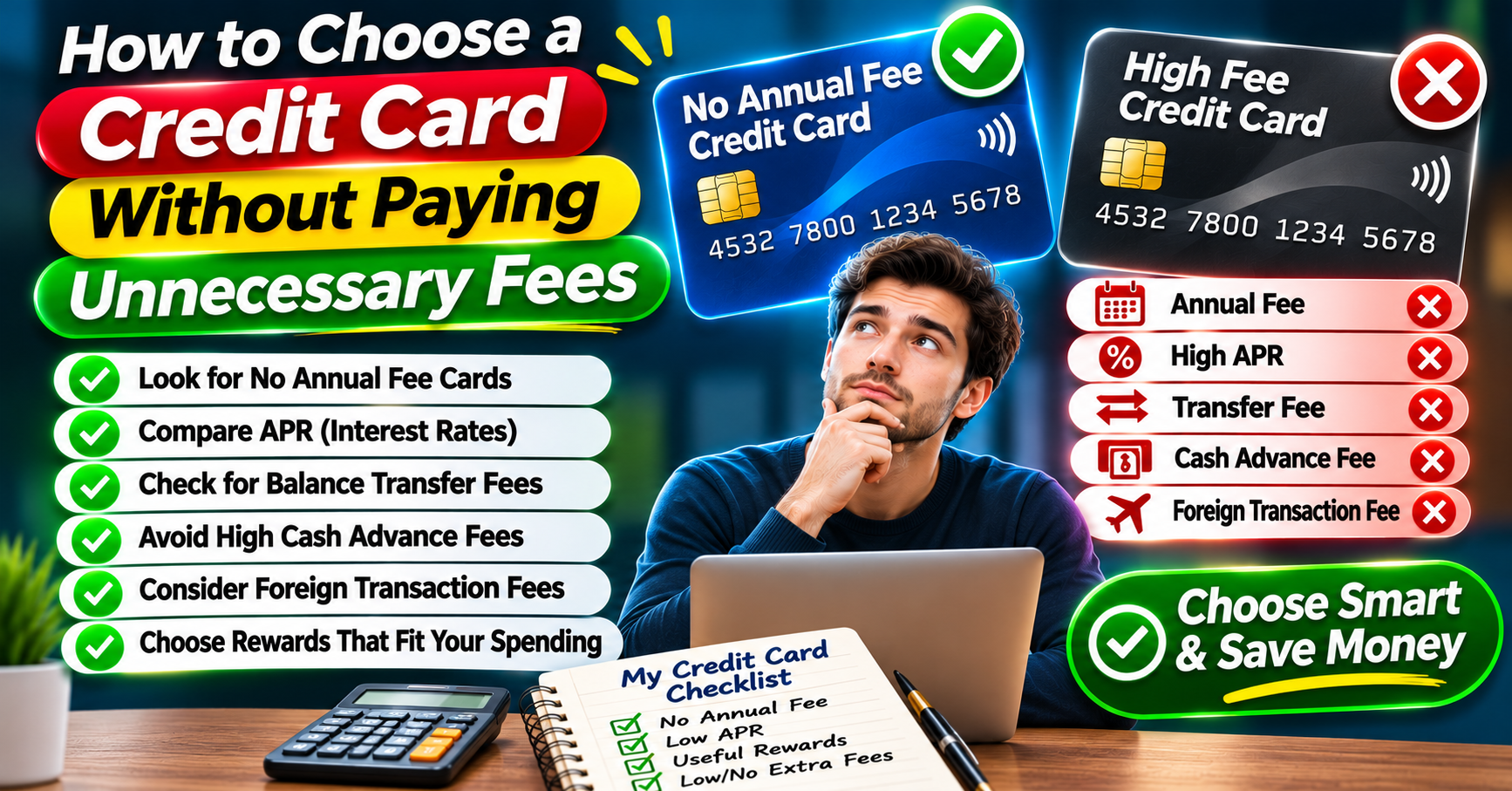
8. Avoid Unnecessary Fees
Interest is not the only expense associated with credit cards.
Depending on the issuer and card agreement, you may encounter annual fees, late-payment fees, cash advance fees, balance transfer fees, or foreign transaction fees.
These charges can increase the overall cost of using credit.
Before applying for a card, review its pricing disclosures.
Choose features that align with your actual financial needs.
For example, a rewards card with a high annual fee may not be worthwhile if you rarely use its benefits.
Similarly, a balance transfer offer may provide limited savings if its upfront fees outweigh the interest reduction.
Understanding the full cost of a card helps you make better financial decisions.
9. Pay Down High-Interest Debt First
If you have balances on multiple credit cards, consider using a structured repayment strategy.
One approach is the debt avalanche method.
Under this strategy, you make required minimum payments on every account and direct additional available money toward the debt with the highest APR.
After paying off that balance, you move to the next highest-interest debt.
This approach generally reduces total interest costs compared with prioritizing lower-rate debts, assuming other factors remain equal.
Another option is the debt snowball method, which focuses on paying off the smallest balances first.
Although the snowball method may cost more in interest, some borrowers find it motivating because they can eliminate individual debts more quickly.
Choose a strategy you can realistically maintain.
10. Watch for Promotional Interest Traps
Credit card promotions can be helpful, but their terms deserve careful attention.
A true 0% introductory APR is different from a deferred-interest promotion.
Deferred-interest offers may advertise no interest if a purchase is paid in full within a specific period.
However, failing to satisfy the repayment conditions can trigger interest charges calculated from the original purchase period.
This can lead to unexpectedly large costs.
Before accepting any promotional financing, review the expiration date, required payments, standard APR, and consequences of leaving a remaining balance.
Set a repayment schedule that clears the debt before the promotional period ends.
What Is Residual Credit Card Interest?
Residual interest, sometimes called trailing interest, can appear after you believe you have paid off a credit card balance.
This happens because interest may continue accumulating between the date a statement is generated and the date your payment is received.
For example, if you were already carrying an interest-bearing balance, paying the statement amount may not cover interest that accumulated afterward.
A small additional charge could therefore appear on your next statement.
If you are trying to eliminate a balance completely, ask your card issuer for the current payoff amount and review the following statement.
Frequently Asked Questions
Can I avoid credit card interest completely?
Yes, many cardholders can avoid interest on eligible purchases by maintaining their grace period and paying their full statement balance on time every month. Cash advances and certain other transactions may still incur interest.
Does paying the minimum stop interest charges?
No. Minimum payments generally help keep an account current, but unpaid interest-bearing balances can continue accumulating interest.
Is credit card interest calculated daily or monthly?
Many issuers use daily interest calculations, although charges typically appear on monthly statements. The exact method is described in the card agreement.
Does paying early save money?
If you already carry an interest-bearing balance, earlier payments can reduce future daily interest charges. If you consistently pay in full and retain your purchase grace period, early payments may not provide additional interest savings.
Is a 0% APR credit card completely free?
Not necessarily. Balance transfer fees, annual fees, late charges, and other costs may still apply. Always review the complete promotional terms.
Final Thoughts
Understanding how credit card interest works is essential for maintaining healthy personal finances.
High APRs, minimum-only payments, cash advances, and missed deadlines can make credit card borrowing more expensive than expected.
Fortunately, there are practical ways to reduce these costs.
Paying your statement balance in full, using grace periods wisely, making timely payments, and limiting unnecessary borrowing can help prevent interest from becoming a financial burden.
If you already have credit card debt, consider a manageable repayment plan, prioritize expensive balances, and compare legitimate lower-interest alternatives.
The most important principle is simple: use credit responsibly and understand the cost of borrowing before carrying a balance.
With consistent financial habits, a credit card can remain a useful payment tool without creating unnecessary interest expenses.
Disclaimer: This article provides general financial education and does not constitute personalized financial advice. Credit card rates, fees, and repayment terms vary by issuer and account agreement.