How to Choose a Credit Card Without Paying Unnecessary Fees
Choosing a credit card can be an important financial decision, especially when you want to manage everyday expenses, build your credit history, or earn rewards on purchases.
With so many credit cards available in the United States, it can be difficult to determine which option provides the best value. Some cards advertise generous cash back rewards, introductory interest rates, or travel benefits, but those advantages may come with fees that reduce their overall value.
Annual fees, late-payment charges, balance transfer fees, and cash advance costs can make a credit card more expensive than expected.
Fortunately, understanding these charges before applying can help you avoid unnecessary expenses.
In this guide, we explain how to choose a credit card with reasonable fees, compare different card offers, and develop financial habits that help keep borrowing costs under control.
Why Credit Card Fees Matter
Credit card fees are charges imposed by card issuers for maintaining an account, using certain services, or failing to meet specific payment requirements.
Although some fees may appear relatively small, they can accumulate over time.
For example, a credit card with a $95 annual fee may cost $475 over five years, even if you never pay interest.
If you also incur late-payment fees or transaction charges, your total expenses could become significantly higher.
For consumers who want to build credit or make occasional purchases, unnecessary fees may outweigh the benefits of owning a particular card.
Before applying, evaluate both the features and the potential costs.
A credit card should support your financial goals rather than create avoidable expenses.
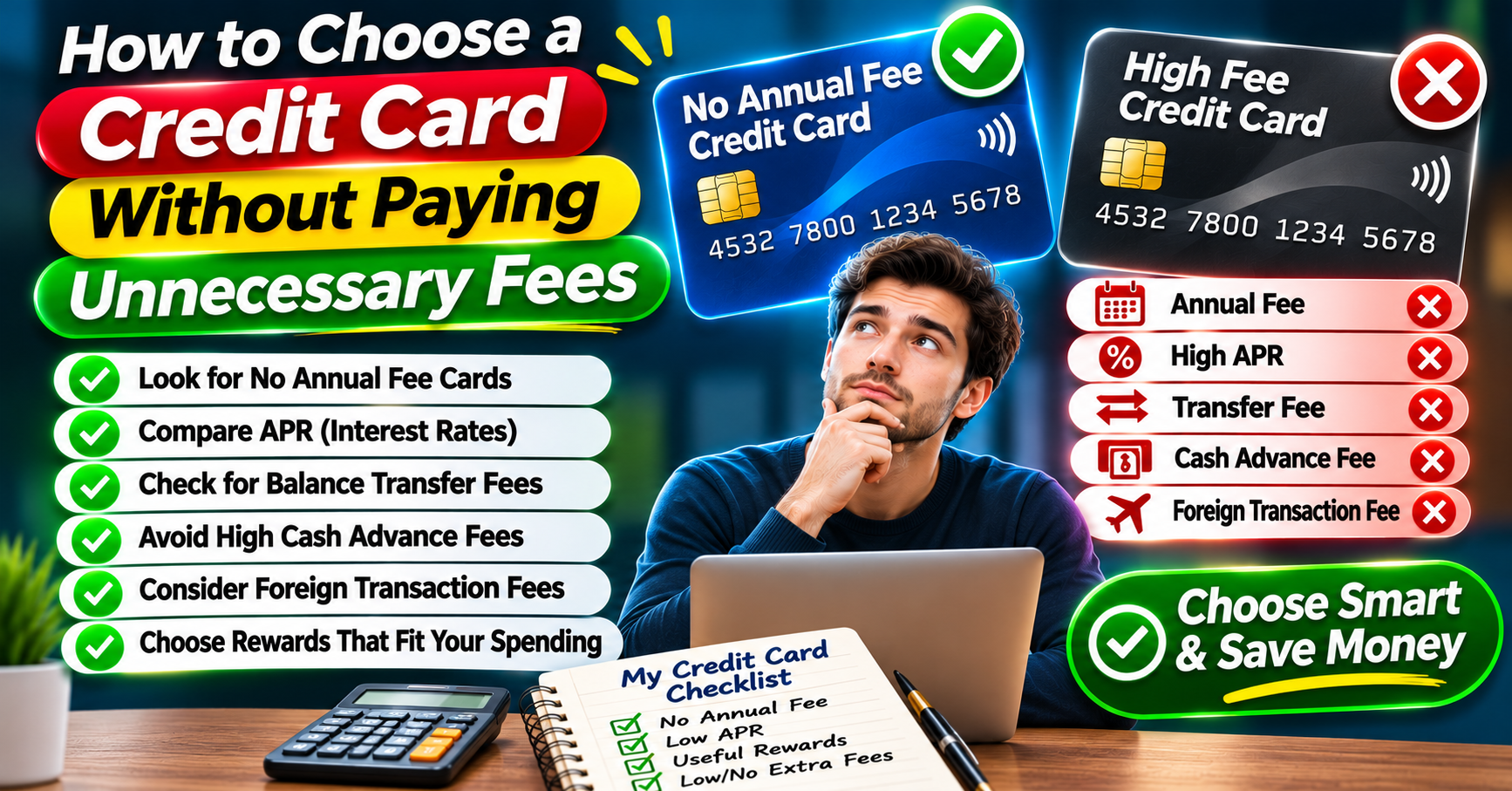
1. Look for Credit Cards With No Annual Fee
An annual fee is a charge that some credit card companies collect each year for maintaining an account.
Certain premium credit cards charge annual fees in exchange for travel rewards, airport lounge access, insurance benefits, or other features.
However, these benefits may not provide enough value for every cardholder.
For beginners and people who use credit cards mainly for everyday expenses, a no-annual-fee card is often worth considering.
Example: Comparing Annual Fees
Imagine two hypothetical credit card offers:
Card A:
Annual fee: $0
Cash back rewards: 2%
Annual spending: $6,000
Card B:
Annual fee: $95
Cash back rewards: 3%
Annual spending: $6,000
With Card A, you could earn approximately $120 in cash back rewards.
With Card B, you could earn $180, but the $95 annual fee would reduce your net rewards to $85.
In this simplified example, Card A provides better value despite offering a lower rewards rate.
Actual value depends on eligible spending, reward restrictions, and additional benefits.
The lesson is simple: compare the rewards you expect to use against the fees you must pay.
2. Understand the Annual Percentage Rate (APR)
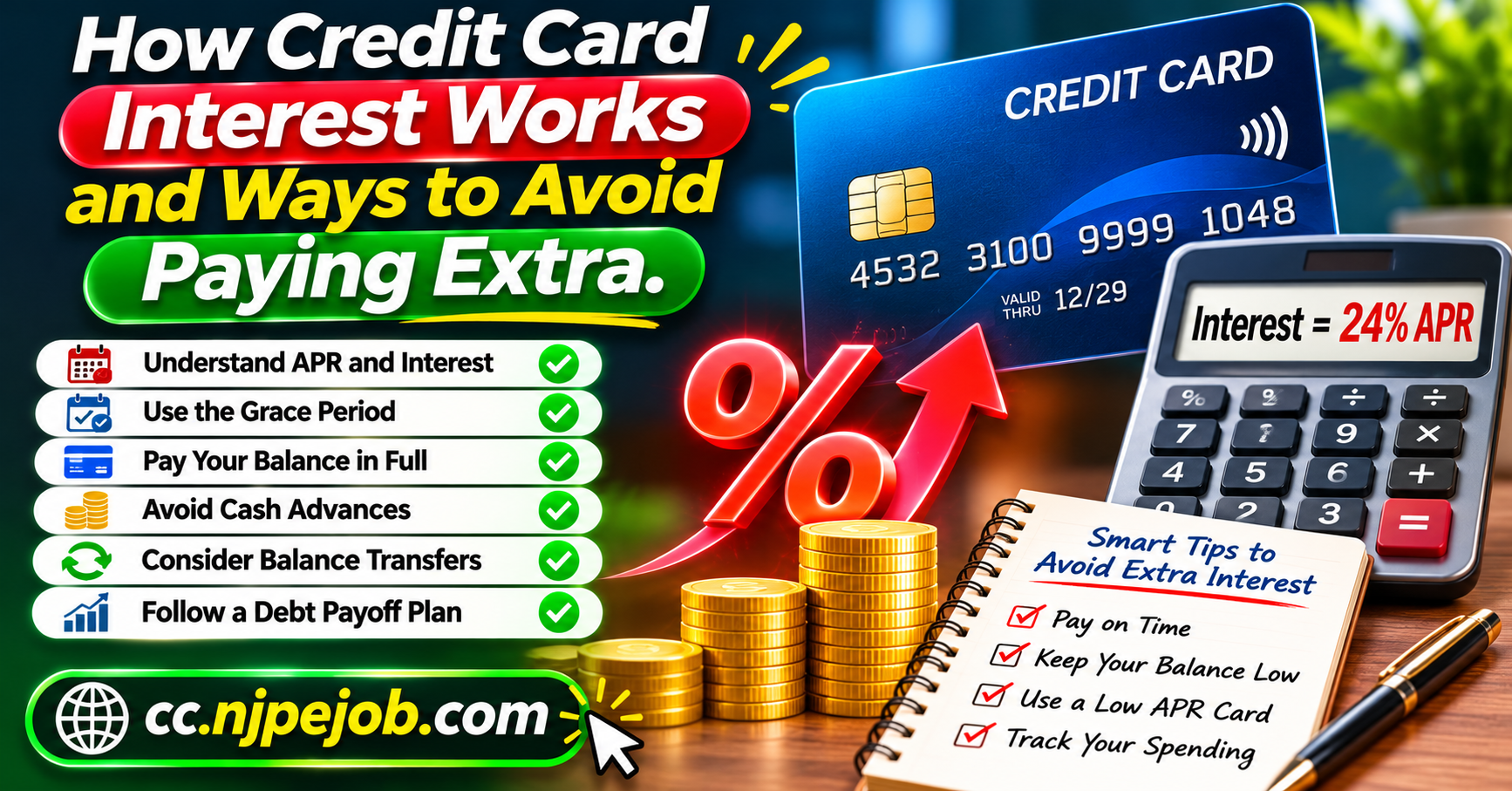
APR stands for Annual Percentage Rate. It represents the annualized interest rate charged on certain credit card balances.
While APR is not the same as a transaction fee, it is one of the most important borrowing costs to compare.
If you carry a balance from month to month, a higher APR can result in substantially greater interest charges.
For example, carrying a $2,000 balance on a credit card with a 25% APR generally costs more than carrying the same balance on a card with a 15% APR.
Your actual interest expense depends on payment timing, daily balances, and the issuer's calculation method.
Many cards offer variable APRs that can change when the underlying reference interest rate changes.
Before applying, review the purchase APR, balance transfer APR, cash advance APR, and any applicable penalty APR.
If you expect to carry a balance, a lower interest rate may be more valuable than an attractive rewards program.
3. Avoid Unnecessary Late-Payment Fees
Late-payment fees are another common credit card expense.
A late fee may apply when the issuer does not receive the required minimum payment by the applicable deadline.
Missing a payment can also lead to other consequences, including potential interest charges, loss of promotional benefits, or negative credit reporting.
The exact fee depends on the card agreement and applicable regulations.
How to avoid late payments
Set up automatic payments through your card issuer.
Create calendar reminders before payment deadlines.
Review your monthly statements.
Keep sufficient money available in your linked bank account.
Contact your issuer if you anticipate payment difficulties.
Paying at least the required minimum on time can help prevent late-payment consequences.
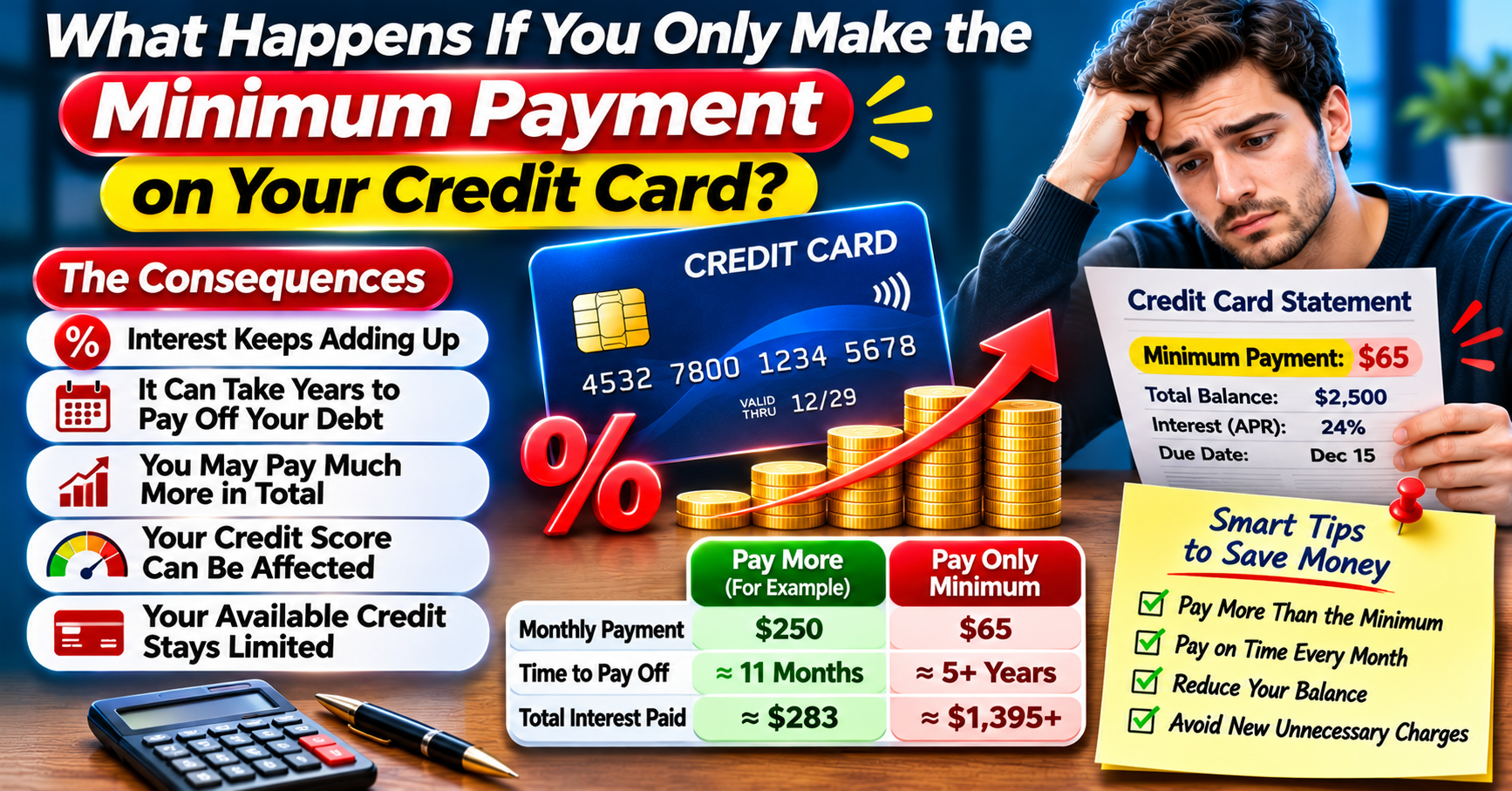
However, paying only the minimum does not usually prevent interest from accumulating on an unpaid balance.
Whenever financially possible, aim to pay your full statement balance.
4. Check Foreign Transaction Fees Before Traveling
Foreign transaction fees can affect people who travel internationally or purchase products from overseas merchants.
Some credit cards charge an additional percentage when transactions are processed internationally.
For example, a card charging a 3% foreign transaction fee could add $30 in fees to $1,000 in qualifying purchases.
For frequent international travelers, these charges can become expensive.
Fortunately, some credit cards do not charge foreign transaction fees.
If you frequently travel or shop internationally, consider comparing cards that offer this benefit.
Remember that a card without foreign transaction fees may still involve currency conversion differences or separate charges imposed by merchants or ATM operators.
Always review the payment currency and transaction details before confirming a purchase.
5. Understand Balance Transfer Fees
A balance transfer allows you to move outstanding debt from one credit card to another.
Some financial institutions offer introductory 0% APR promotions for balance transfers.
These promotions may help borrowers reduce interest charges while paying down existing debt.
However, transferring a balance is not necessarily free.
Many cards charge a transfer fee calculated as a percentage of the amount transferred.
Example
Suppose you transfer $2,500 to a credit card charging a 3% balance transfer fee.
Your fee would be:
$2,500 × 3% = $75
Your new balance could therefore become $2,575, before considering any additional transactions or charges.
A promotional interest rate may still provide savings, but only if the reduced interest costs outweigh the transfer fee.
Before accepting an offer, examine the promotional period, regular APR, transfer fee, and repayment requirements.
Also check whether maintaining a transferred balance affects the grace period on new purchases.
6. Avoid Cash Advance Fees
Credit card cash advances are often more expensive than ordinary purchases.
When you withdraw money using a credit card, the issuer may charge a cash advance fee.
You may also face a higher interest rate than the card's standard purchase APR.
Unlike many purchase transactions, cash advances generally do not qualify for a grace period.
This means interest may begin accumulating immediately.
For example, withdrawing $500 could result in a transaction fee plus interest charges from the date of the withdrawal.
ATM operators may also impose additional charges.
Because these costs can accumulate quickly, avoid using credit cards for routine cash withdrawals.
Consider alternatives and compare the total cost before using a cash advance.
7. Examine Introductory APR Offers Carefully
Introductory APR promotions can be useful, but they require attention to the terms.
Some cards offer 0% APR on eligible purchases for a limited period.
This can make larger planned purchases easier to repay without promotional interest charges during that period.
However, the standard APR generally applies to remaining balances after the introductory offer expires.
Additionally, certain promotions have conditions related to payment behavior.
You should also understand the difference between a true 0% introductory APR offer and deferred-interest financing.
With deferred-interest promotions, failing to pay the qualifying balance in full before the deadline may trigger interest calculated from the original purchase date.
Before accepting any promotion, identify its expiration date and develop a realistic repayment schedule.
Do not assume that every offer advertising temporary interest savings works the same way.
8. Compare Rewards Against the Total Cost
Rewards programs are among the most attractive credit card features.
Many issuers offer cash back, travel points, statement credits, or other benefits.
However, rewards should not be the only factor in your decision.
A card offering impressive benefits may also charge a high annual fee.
Some rewards programs include restrictions, spending categories, redemption requirements, or expiration policies.
To evaluate a rewards card, estimate how much you normally spend and calculate the value of the rewards you would realistically earn.
Then subtract any relevant annual fees.
For example, if a card offers rewards worth approximately $150 per year but charges a $120 annual fee, your basic net benefit is only $30.
A no-annual-fee card with simpler rewards could offer better overall value.
Avoid making unnecessary purchases just to earn rewards.
Spending more money to receive a small percentage back rarely improves your finances.
9. Review the Credit Card Pricing Disclosure
In the United States, credit card offers generally include a standardized pricing table that summarizes important interest rates and fees.
This disclosure is commonly known as the Schumer Box.
It helps consumers compare card offers using a consistent format.
Before submitting an application, carefully review the information provided.
Pay particular attention to:
Purchase APR
Balance transfer APR
Cash advance APR
Annual membership fee
Balance transfer charges
Foreign transaction fees
Late-payment fees
Penalty APR conditions
Some cards also have additional charges or conditions explained elsewhere in the agreement.
Reading the complete terms can help you avoid unexpected costs after opening the account.
10. Choose a Card That Matches Your Spending Habits
The best credit card depends on how you intend to use it.
A college student building credit may prioritize a no-annual-fee card with simple account management tools.
Someone who regularly travels internationally may prefer a card without foreign transaction fees.
A person paying down existing debt may benefit more from a competitive APR than from rewards.
Similarly, someone who pays every statement balance in full may find rewards more valuable because they can generally avoid purchase interest when eligible for a grace period.
Before choosing a card, ask yourself:
Will I pay my balance in full every month?
Do I need travel benefits?
Will I use the card internationally?
Can I afford an annual fee?
Am I trying to build credit or repay debt?
Which fees am I most likely to encounter?
Your answers can help narrow down the available options.
How to Compare Two Credit Cards Before Applying
Consider the following simplified comparison.
| Feature | Card A | Card B |
|---|---|---|
| Annual fee | $0 | $95 |
| Purchase APR | 19.99% | 24.99% |
| Cash back | 1.5% | 3% |
| Foreign transaction fee | 3% | 0% |
| Balance transfer fee | 3% | 5% |
| Best suited for | Everyday spending | Selected rewards and international spending |
These are hypothetical examples, not actual advertised products.
Card A may be more suitable for someone who wants lower ongoing fees and a relatively lower APR.
Card B may appeal to consumers who spend enough in eligible reward categories or regularly benefit from fee-free foreign transactions.
Neither option is automatically better.
The decision should be based on your personal spending patterns, repayment habits, and expected costs.
Smart Habits That Help Avoid Credit Card Fees
Choosing a reasonably priced card is only part of managing credit effectively.
Daily financial habits also influence how much you spend.
Pay Your Full Statement Balance
If your card provides a purchase grace period and you remain eligible, paying the full statement balance by the due date can generally help you avoid purchase interest.
Monitor Account Activity
Review your transactions regularly.
This can help identify incorrect charges, unfamiliar purchases, or fees you did not expect.
Set Up Payment Alerts
Payment notifications can reduce the risk of accidentally missing deadlines.
Avoid Unnecessary Transactions
Cash advances and certain balance transfers can create additional expenses.
Use these features only after understanding their costs.
Request a Fee Review
If you incur an unexpected fee, contact your issuer and ask whether a waiver is available.
Some financial institutions may provide courtesy adjustments, but approval is not guaranteed.
Review Your Card Every Year
Your financial needs may change over time.
A card that was useful several years ago may no longer provide the best value.
Evaluate its fees, benefits, and interest rates periodically.
Common Credit Card Mistakes to Avoid
Several mistakes can make an otherwise affordable credit card expensive.
One is applying for a premium rewards card without calculating whether its annual benefits justify the fee.
Another is focusing on the minimum monthly payment rather than the total outstanding balance.
Some consumers also overlook promotional expiration dates or assume a 0% balance transfer has no associated fees.
Applying for several credit cards within a short period can lead to multiple hard inquiries and may affect your credit profile.
Finally, closing an old credit card without considering its effect on your available credit and credit history may have unintended consequences.
Careful planning can help prevent these problems.
Frequently Asked Questions
Are no-annual-fee credit cards better?
They are often a good choice for beginners and consumers who want to minimize fixed costs. However, cards with annual fees may provide sufficient benefits to justify their expense for some users.
Can I avoid credit card interest completely?
Many cardholders can avoid interest on eligible purchases by maintaining their grace period and paying their full statement balance by the due date. Other transaction types may incur interest immediately.
Is a 0% APR credit card free?
Not necessarily. Annual fees, balance transfer charges, late-payment fees, or other costs may still apply.
Can I ask my credit card company to waive a fee?
Yes. You can request a review or courtesy waiver, especially for an occasional fee. The issuer decides whether to approve the request.
Do credit card rewards outweigh fees?
That depends on the rewards you actually earn and use, the fees charged, and your repayment behavior. Interest expenses can quickly exceed the value of rewards.
Final Thoughts
Choosing a credit card without paying unnecessary fees requires more than comparing rewards or advertised interest rates.
Annual fees, cash advance charges, balance transfer costs, foreign transaction fees, and late-payment penalties can significantly affect the total cost of using credit.
The best approach is to compare multiple offers, understand their pricing disclosures, and select a card that matches your financial habits.
A no-annual-fee credit card with reasonable terms may be a practical starting point for many consumers.
However, cards with annual fees can also provide good value when their benefits are genuinely useful.
Most importantly, pay attention to payment deadlines, avoid unnecessary borrowing, and review your statements regularly.
By making informed decisions and maintaining responsible financial habits, you can enjoy the convenience of credit cards while keeping avoidable expenses under control.
Disclaimer: This article provides general financial education and does not constitute personalized financial advice. Credit card fees, interest rates, and approval requirements vary by issuer and individual circumstances.